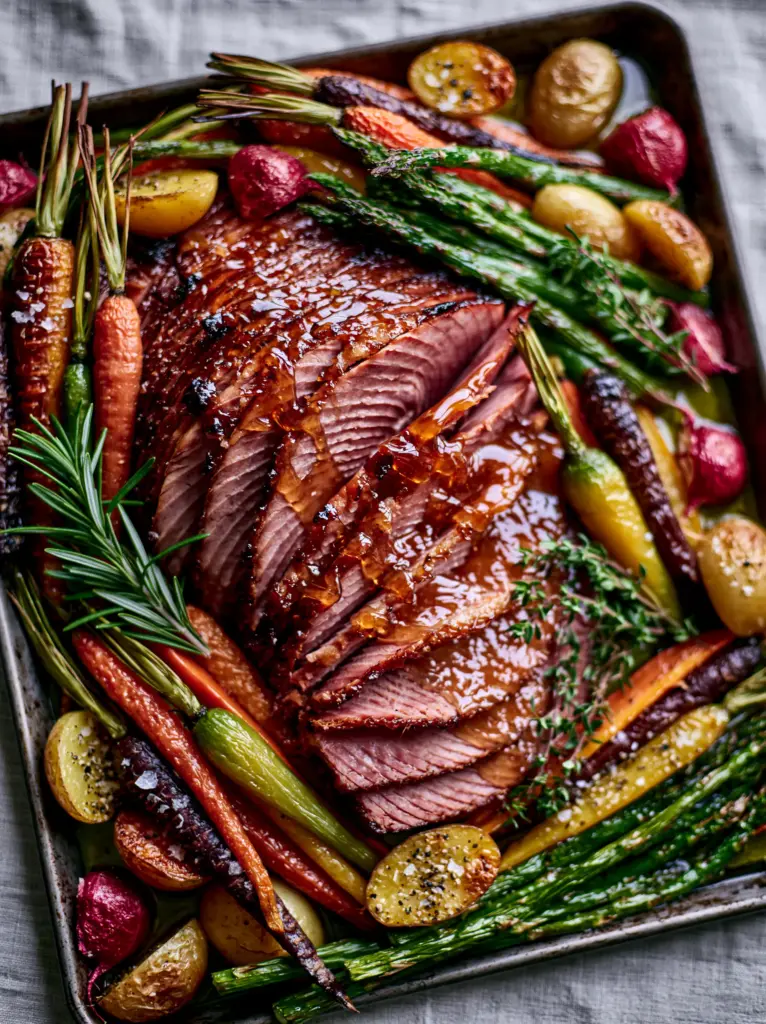
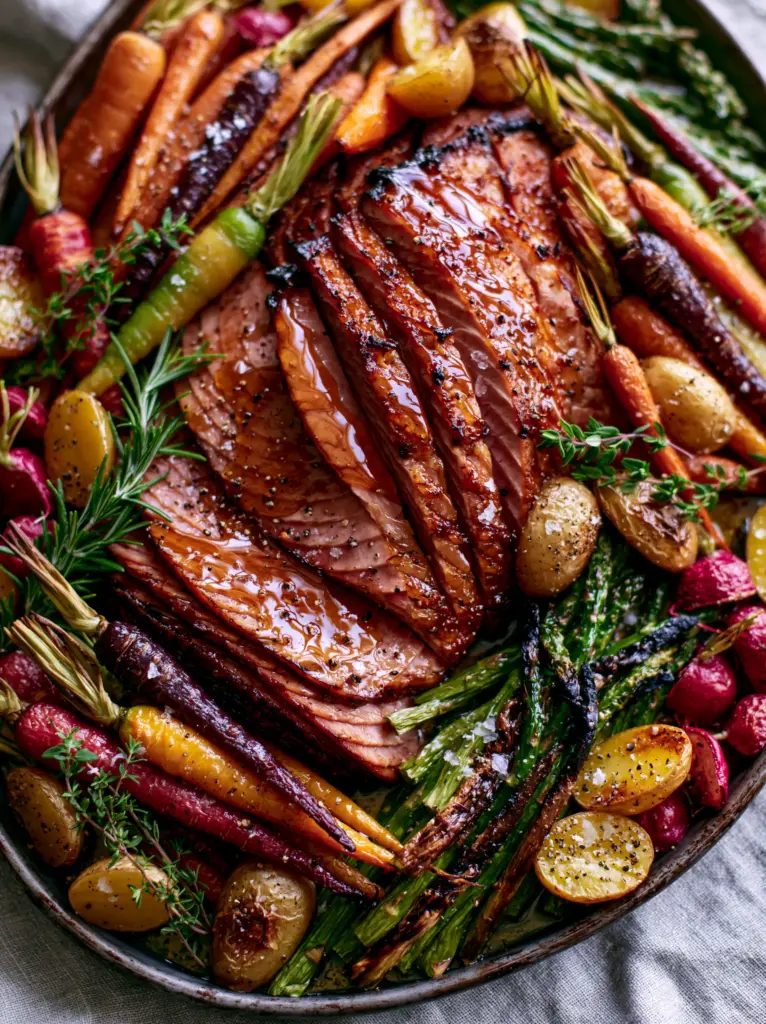
The sheet pan Easter dinner is the ultimate solution for home cooks who want to spend more time with family and less time scrubing pots and pans. Imagine a single, dark metal tray overflowing with succulent, spiral-cut ham slices, every edge glistening with a viscous, translucent honey amber glaze. Surrounding this centerpiece is a garden of vibrant rainbow carrots, charred asparagus, and crispy golden baby potatoes, all harmonized by the fragrance of fresh rosemary and thyme.
This recipe isn’t just about convenience; it is about achieving a high-end, gourmet result using professional roasting techniques. By coordinating the cooking times of your proteins and seasonal vegetables, you create a cohesive feast that looks like a handheld smartphone photo from a luxury food magazine. The olive oil sheen on the vegetables reflects the warm natural light, while flakes of sea salt and cracked black pepper add the final textural punch.
Why This One-Pan Holiday Feast Works
- Succulent Texture: The spiral-cut ham remains incredibly moist while developing those coveted charred, caramelized edges from the amber glaze.
- Vibrant Visuals: We utilize rainbow carrots with green tops and bright red radishes to ensure a stunning, colorful presentation that pops against the dark metal pan.
- Perfectly Timed Roasting: By staging the addition of tender vegetables like asparagus, we ensure every component is cooked to its ideal fork-tender or charred state.
- Complex Flavor Profile: The sweetness of the honey glaze balances the earthy notes of roasted radishes and the herbal aromatics of fresh rosemary and thyme.
The Anatomy of a Perfect Sheet Pan Easter Dinner
To achieve the visual and culinary results described in our blueprint, every ingredient must serve a specific purpose. We aren’t just throwing things on a tray; we are building a flavor landscape.
Spiral-Cut Ham Slices (2 lbs / 900g): We use pre-sliced ham to maximize the surface area for the glaze to cling to, ensuring every bite is infused with honey and spice.
Honey (1/2 cup / 170g): This is the foundation of our viscous amber glaze. It provides the stickiness required for that high-gloss, translucent finish.
Brown Sugar (1/4 cup / 50g): When combined with honey, brown sugar aids in the Maillard reaction, helping to create those slightly charred, crispy edges on the ham slices.
Rainbow Carrots (1 bunch / approx. 450g): Leave the green tops partially intact (about 1 inch / 2.5cm) for a rustic, farm-to-table aesthetic that signifies freshness.
Golden Baby Potatoes (1 lb / 450g): Halving these potatoes exposes the starchy interior to the hot oil, creating a crispy, golden-brown skin that contrasts with the soft interior.
Red Radishes (1 bunch / 200g): Roasting radishes transforms their spicy bite into a mellow, succulent sweetness that surprises most guests.
Fresh Asparagus (1 bunch / approx. 340g): We look for a light char on the tips, providing a vertical element to the pan’s composition and a snap of green freshness.
Olive Oil (3 tbsp / 45ml): This creates the essential “sheen” mentioned in our visual blueprint, acting as a heat conductor for the vegetables.
Fresh Rosemary and Thyme: These woody herbs are scattered throughout to infuse the entire pan with a woodland aroma that screams “springtime.”
Flaky Sea Salt and Cracked Black Pepper: Large flakes of salt are visible to the eye and provide a satisfying crunch that elevates the honeyed glaze.
Essential Equipment for a Gourmet Result
A high-quality Dark Metal Sheet Pan is non-negotiable for this recipe. Darker pans absorb more heat than light aluminum ones, which is the secret to achieving the charred edges on the ham and the crispy skins on the baby potatoes.
You will also need a Small Saucepan to simmer the honey glaze until it reaches a viscous, translucent state. A Silicone Pastry Brush is vital for painting that amber glaze into every crevice of the spiral slices, ensuring no spot is left unglazed.
Step-by-Step Guide to the Ultimate Easter Sheet Pan
1. Prepping the Foundation and Potatoes
Preheat your oven to 400°F (200°C). Start by halving your golden baby potatoes and tossing them in a bowl with olive oil, sea salt, and pepper.
Place the potatoes cut-side down on the dark metal sheet pan. This direct contact with the hot metal is what creates the “crispy skins” described in our visual blueprint.
2. Preparing the Rainbow Carrots and Radishes
Scrub the rainbow carrots thoroughly, keeping a small amount of the green tops for visual appeal. If the carrots are particularly thick, slice them lengthwise so they cook at the same rate as the potatoes.
Halve the red radishes. Much like the potatoes, roasting them face-down will help develop a beautiful color. Arrange them on the pan, leaving a large space in the center for your ham.
3. Crafting the Honey Amber Glaze
In a small saucepan over medium heat, combine the honey, brown sugar, a splash of water, and a pinch of cinnamon or cloves if desired. Simmer for 3-5 minutes until the mixture thickens slightly.
The goal is a “viscous, translucent amber glaze.” It should be thick enough to coat the back of a spoon but clear enough to let the texture of the ham show through.
4. Staging the Roasting Process
Place the sheet pan with potatoes, carrots, and radishes into the oven for 15 minutes. This gives the denser root vegetables a head start before the delicate ham and asparagus are added.
While the vegetables roast, prepare your spiral-cut ham slices by fanning them out slightly. This ensures the heat and glaze can penetrate every layer.
5. Adding the Ham and Asparagus
Remove the pan from the oven. Push the partially roasted vegetables to the edges to create a “dense and overflowing” look. Place the ham slices in the center.
Nestle the charred green asparagus spears into any remaining gaps. Use the pastry brush to generously coat the ham and lightly brush the vegetables with the remaining glaze.
6. The Final Roast and Sensory Cues
Return the pan to the oven for another 15-20 minutes. Watch for the glaze on the ham to start bubbling and turning a deep amber. The edges of the ham should look “lightly charred.”
The asparagus is done when the tips are slightly blackened and the stalks are tender yet snap when bitten. Look for that “olive oil sheen” on the carrots and potatoes, indicating they are perfectly roasted.
Expert Tips for Success
- Don’t Overcrowd the Pan (Initially): While the final presentation should be “dense and overflowing,” ensure the potatoes have enough room to crisp up during the first 15 minutes of roasting.
- Watch the Sugar: Honey and brown sugar can burn quickly. If the ham edges are charring too fast, tent that portion of the pan with a small piece of foil.
- Use Fresh Herbs: Don’t use dried rosemary or thyme here. The fresh sprigs provide the vibrant green color and specific aroma that defines a festive Easter feast.
- Temperature Check: Since the ham is pre-cooked, you are looking for an internal temperature of 140°F (60°C) to ensure it is succulently hot without being dried out.
Perfect Pairings for Your Easter Dinner
While this sheet pan Easter dinner is a complete meal on its own, you might want to round out your holiday spread. For those looking for more veggie-forward additions, check out our Vegetarian Dinner Recipes for inspiration.
If you have leftover ham, it works beautifully in a Southern Tomato Pie or can be chopped up for easy Back to School Dinner Ideas. If you prefer a lighter side, a crisp Peach Feta Salad provides a lovely acidic contrast to the rich honey glaze.
Storing and Reheating Your Roast
Leftovers can be stored in an airtight container in the refrigerator for up to 3-4 days. The roasted vegetables may lose some of their crispness, but the flavors will continue to meld.
To reheat, place the ham and vegetables back on a sheet pan in a 350°F (175°C) oven for 10 minutes. This helps restore the texture of the potatoes and the sheen of the glaze better than a microwave would.
Frequently Asked Questions
Yes, you can prepare the glaze up to three days in advance. Just gently reheat it in a saucepan until it becomes liquid and viscous again before brushing it onto your ham and vegetables.
For this specific recipe, fresh vegetables are required to achieve the ‘charred’ and ‘glistening’ visual described. Frozen vegetables release too much moisture, which would steam the ham rather than roast it.
The secret is using a viscous honey glaze and adding the ham later in the roasting process. By roasting it for only 15-20 minutes at high heat, you achieve charred edges while the interior stays succulently moist.
Absolutely. Roasting radishes removes their peppery bite and gives them a tender, juicy texture similar to a turnip, making them a colorful and unique addition to an Easter feast.
Regular carrots work perfectly fine! Simply peel them and slice them into sticks of equal size to ensure they roast evenly alongside the potatoes and radishes.
The Ultimate Sheet Pan Easter Dinner Recipe
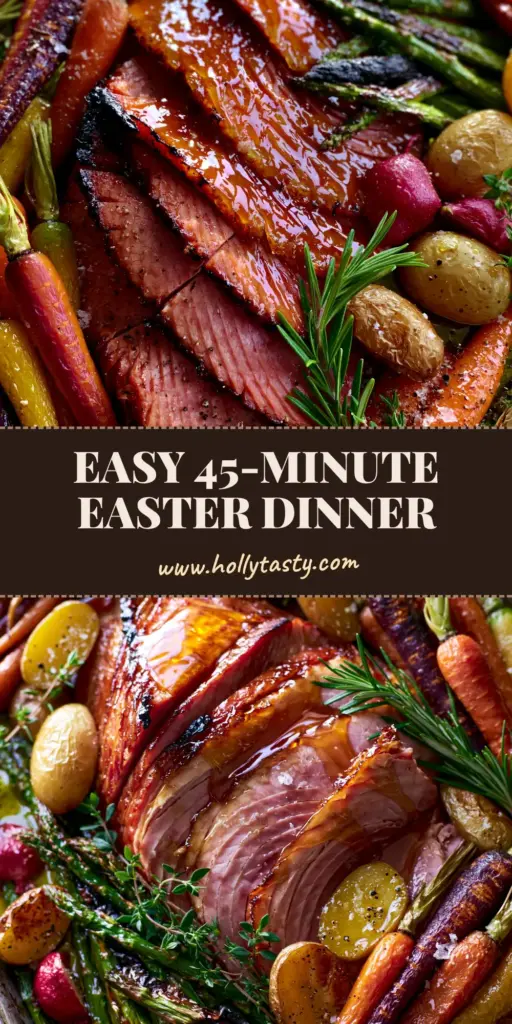
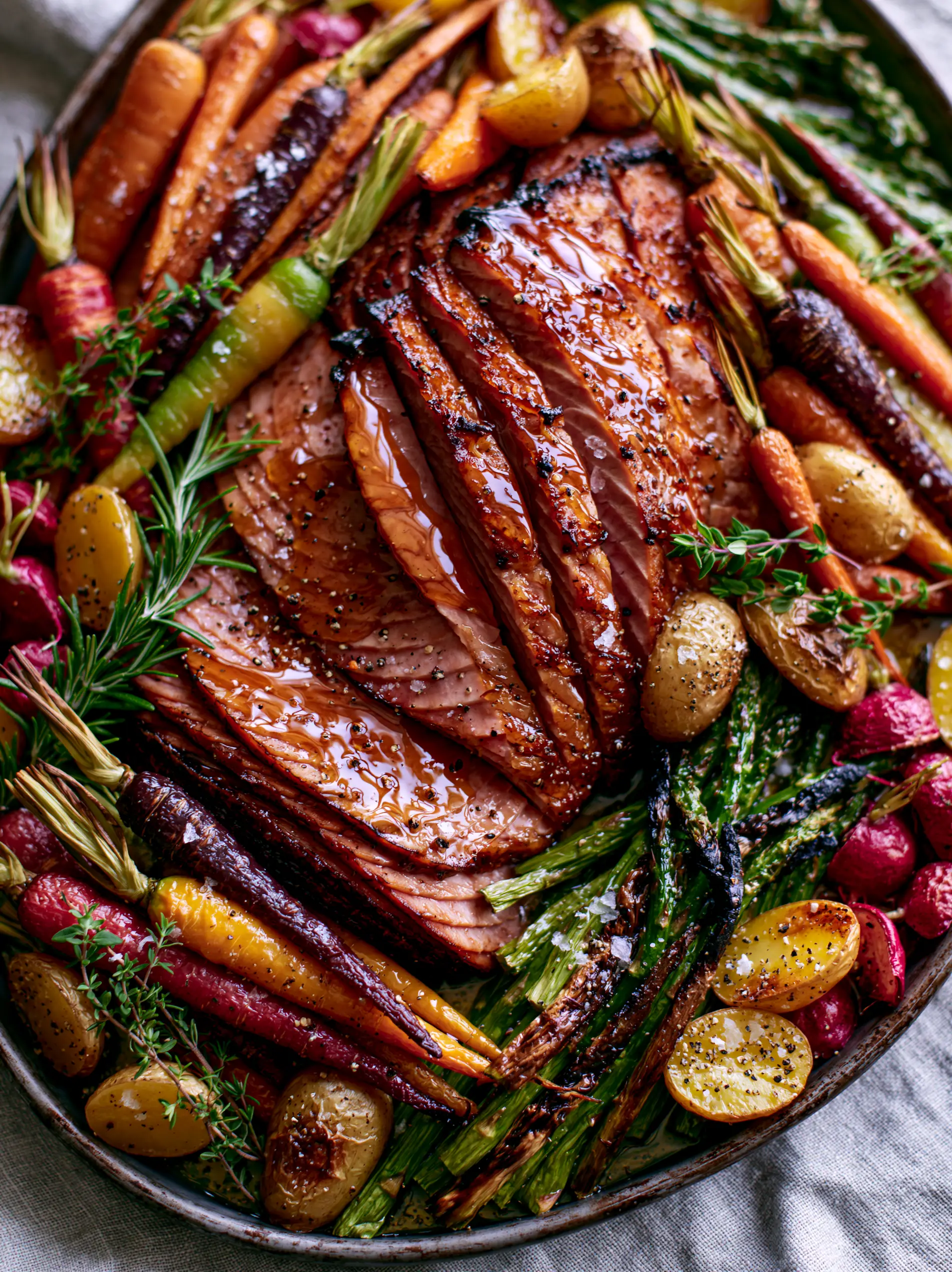
Sheet Pan Easter Dinner With Honey Glazed Ham and Roasted Rainbow Vegetables
Ingredients
Equipment
Method
- Preheat oven to 400°F (200°C). Toss halved potatoes, rainbow carrots, and radishes with olive oil, salt, and pepper. Arrange on a dark metal sheet pan.
- Roast the root vegetables for 15 minutes to ensure the potatoes develop crispy skins.
- Simmer honey and brown sugar in a saucepan for 3-5 minutes until a viscous amber glaze forms.
- Add ham slices and asparagus to the pan. Brush ham generously with glaze. Roast for 15-20 more minutes until ham edges are charred and asparagus is tender.
- Scatter fresh rosemary, thyme, and extra flaky sea salt over the dense, overflowing pan before serving.
Notes
Ensure the honey glaze is simmered until translucent for the best visual sheen.
Create Your Own Festive Memories
This sheet pan Easter dinner is designed to take the stress out of holiday hosting without sacrificing the gourmet quality your guests deserve. The combination of succulent ham and charred, oil-glistening vegetables creates a centerpiece that is as beautiful as it is delicious. If you enjoyed this recipe, please leave a comment below and share your photos with us on Pinterest!